

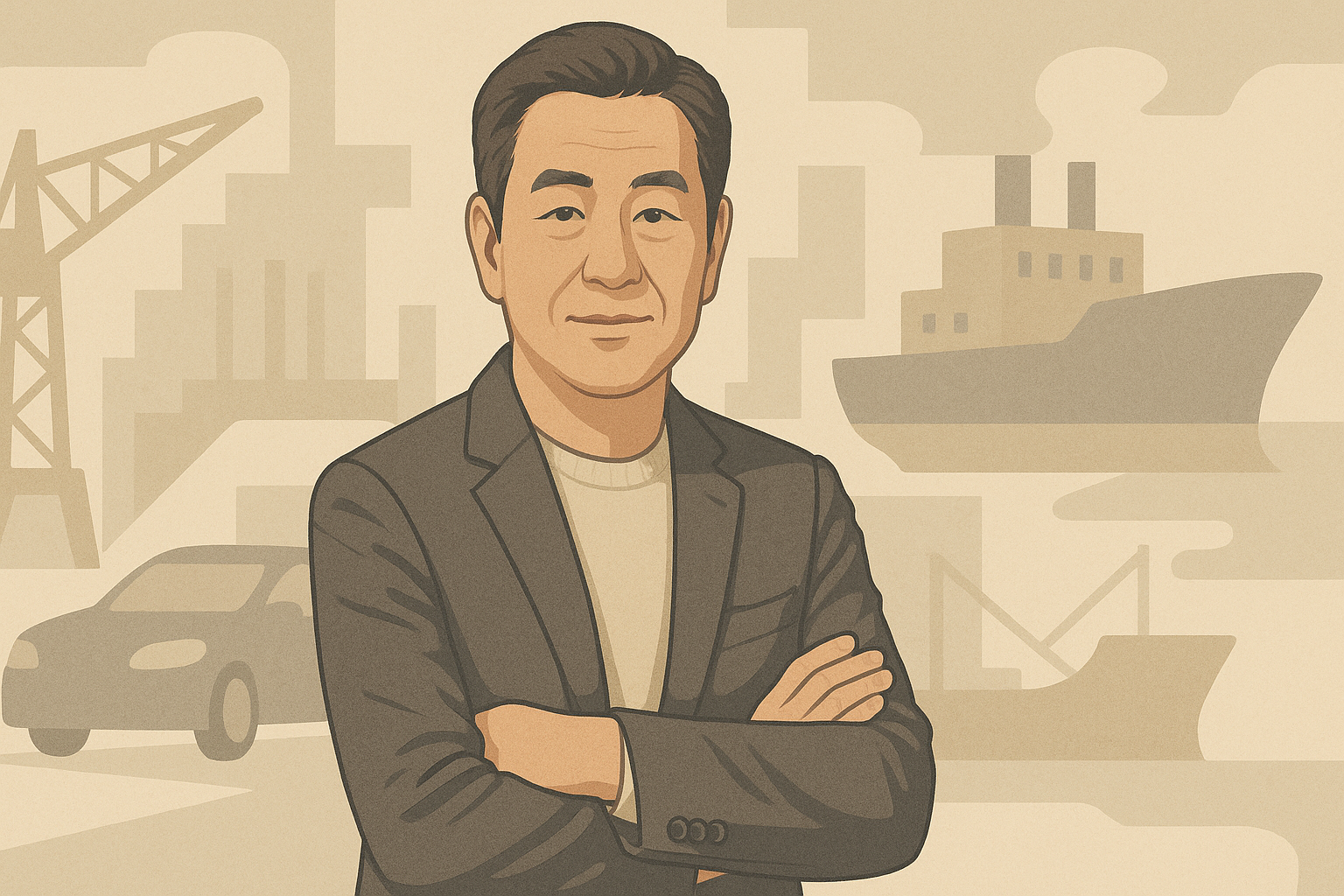
Chung Ju Yung entered the world in conditions most people today could hardly imagine. His family lived in rural Korea where the soil was thin, food was scarce, and every season carried a new threat. There were days when the family survived by scraping bark from trees because there was nothing else to eat. Hunger was a constant teacher, and it shaped the mindset that would later define one of the most influential builders of the twentieth century.
Chung remembered those years in detail. The cold, the hollow feeling in his stomach, the frustration of living in a place with almost no opportunity. That pressure created a sense of urgency early in his life. It also built the belief that circumstances could be changed through effort. The conditions were severe, but they did not break him. Instead, they gave him a clear picture of the life he refused to accept.
From the start he showed a stubborn streak. It was not rebellion for rebellion’s sake. It was a drive to find something better. Even as a child he sensed that improvement could not come from waiting. It had to be earned through action.
Chung attempted to run away from home four times. Each attempt was a new expression of the same idea. He did not want a life controlled by scarcity. He wanted a chance to work and control his own future. The first three attempts ended with his father finding him and bringing him back. The fourth time he made it far enough that turning back was no longer an option.
This early break from home was not romantic or exciting. It was frightening. He had no real plan and no safety net. But he believed he could work his way forward. That belief mattered more than any resources he lacked.
In his autobiography he wrote about how each setback shaped his thinking. His attitude hardened in the best way. When he was blocked, he pushed again. When he was told he could not do something, he tried anyway. These moments gave him the reputation that would follow him all his life. People called him The Bulldozer not because of a loud personality, but because he refused to stop moving.
Once he was on his own, Chung took whatever job he could find. He shoveled rice. He hauled bags of grain. He swept floors. None of it felt beneath him. He needed the money, but more than that he needed the experience. Every simple task taught him something about responsibility.
He learned to show up early, stay late, and finish every assignment with care. His coworkers noticed that he worked with a seriousness that felt unusual for someone his age. He watched how supervisors behaved. He paid attention to customer demands. He absorbed details that others ignored. These habits became the foundation of the leadership style he used later at Hyundai.
There was a principle he repeated often. If you do a small task well, someone will eventually trust you with a bigger one. This belief carried him forward. It kept him focused when the work became long and the hours felt never ending. Hard work did not solve everything, but it created openings that would have been impossible otherwise.
Chung’s first major opportunity came in the auto repair world. The industry was still developing in Korea at the time, and cars were rare. But he could see that mechanical knowledge would be valuable. He offered to do any job at the shop. Cleaning parts. Carrying tools. Watching and learning. Over time he built real technical understanding.
The work was difficult. Tools were limited. Customers arrived with problems that seemed impossible to solve. Yet Chung thrived. He enjoyed the challenge. He liked the puzzle of understanding how machines worked. That passion became a clear direction for his future.
The repair shop also showed him what customers valued. They wanted honesty. They wanted fast service. They wanted someone who cared enough to fix things properly the first time. Chung took these lessons seriously. He practiced them long before he ever thought of building a company of his own.
Chung believed in relentless effort, and he often used a strange example to explain his mindset. He told people to study bedbugs. Bedbugs cling tightly. They survive in harsh conditions. They do not let go easily. Chung admired that level of persistence. To him it represented the attitude required to rise from poverty.
This metaphor became part of his management culture. He told young workers that success came from hanging on longer than others. Not with force, but with endurance. When a job seemed too large, he encouraged his team to think like the small creature that refused to be shaken loose. It was unusual advice, but it captured exactly how he lived.
Chung eventually opened his own auto service center. He named it Hyundai, a word that represented modernity and progress. The name reflected his intention. He wanted to build something new for Korea. Something forward looking. Something that could grow far beyond a simple repair shop.
The early years were not smooth. Financial trouble appeared again and again. Equipment broke. Customers were scarce at times. Then a major disaster wiped out much of what he built. But failure never slowed him for long. He rebuilt. Then he rebuilt again. This was another reason people called him The Bulldozer. Even enormous setbacks could not knock him off course.
After establishing his service center, Chung turned his attention to construction. Korea was rebuilding after years of hardship, and he saw a chance to contribute to projects that would shape the country’s future. He started small and expanded fast. Bridges, roads, and industrial facilities followed.
Then the Korean War erupted. Once again everything collapsed. His business was nearly destroyed for a second time. Many entrepreneurs would have reached their limit. Chung did not. Instead he worked day and night to rebuild the company and respond to the needs of a country torn apart.
He often said that struggle clarified his thinking. Hard moments were not pleasant, but they forced him to focus on what mattered. They revealed what he was capable of. They sharpened his determination.
Chung expected a lot from his people. He expected even more from himself. He did not believe in wasted time. If a job needed to be done, he wanted it done immediately. This urgency helped Hyundai move quickly, but it created pressure. It also demanded discipline. Workers who thrived under him were the ones who shared his desire for progress.
He believed that responsibility was a privilege. If someone trusted you with a project, you should treat that trust with respect. This mindset made Hyundai a reliable partner in both construction and manufacturing. When other companies hesitated, Hyundai stepped forward.
Chung often said that a company could not grow if it stayed in a poor environment. Korea lacked resources at the time, so he looked outward. He believed that Hyundai needed to work overseas to gain experience and earn revenue. This decision became pivotal. International contracts gave the company cash, knowledge, and reputation. They proved that Hyundai could compete on a global level.
This approach carried risk. Language barriers, cultural differences, and unfamiliar regulations made every project challenging. But Chung believed that avoiding risk would trap Hyundai in mediocrity. He pushed the company into markets where others refused to go.
After years in construction and repair work, the idea of building cars became unavoidable. Korea needed a domestic automotive industry. Chung believed Hyundai could do it. The project required capital, expertise, and partnerships that did not yet exist. None of that stopped him.
He pushed the team forward at full speed. Sometimes too fast. His intensity created mistakes. But the larger vision held. Hyundai Motors launched and became one of the most influential brands in the country. What began as a small repair shop grew into a major manufacturing force.
Chung’s expansion into shipbuilding started with a small thought. Korea imported ships, but it did not build them. He believed the country could learn. When he presented the idea, many people dismissed it. They said the industry was too complex. They pointed out that Korea lacked the facilities. They listed every reason it was impossible.
Chung ignored them. He approached shipbuilding the same way he approached every challenge. Begin with what you have. Learn fast. Add capacity. Improve every day. That simple idea became the foundation for Hyundai Heavy Industries, one of the most important shipbuilding companies in the world.
As he grew older, Chung refined a set of principles that guided his decisions.
He believed determination was more important than intelligence. Smart people quit too early. Determined people pushed through.
He believed you should love your work. If you loved it, you could endure difficulty without losing spirit.
He believed luxury weakened ambition. Comfort created excuses.
He believed diligence was the source of opportunity. Not talent. Not luck. Diligence.
He believed positive thinking shaped outcomes. When he looked at a problem, he focused on what he could do, not on what he feared.
These beliefs were not theories. They were lessons earned through decades of struggle and achievement. They influenced every part of Hyundai’s culture.
By the time Chung reached his eighties, he had built one of the largest conglomerates in Asia. His companies employed hundreds of thousands of people. They produced cars, ships, electronics, steel, and infrastructure. The empire spanned the globe.
Yet he never forgot where he began. He remembered the cold nights in the countryside. He remembered eating bark. He remembered running away. His life stood as proof that circumstances could be changed through work, discipline, and belief.
He wrote his autobiography in his later years to show younger generations that progress required courage. He wanted them to know that the road to success was steep, but not impossible. His story remains one of the strongest examples of how a single person’s will can transform an entire nation’s industrial future.
• Move before you feel ready
Waiting for perfect circumstances only delays progress. Chung acted with limited resources and learned the rest along the way.
• Treat small tasks with seriousness
He believed every job was a chance to show reliability. This habit built trust and opened the door to larger responsibilities.
• Go where opportunity exists
His decision to pursue international contracts changed Hyundai’s future. Growth often requires leaving familiar ground.
• Stay determined even when the odds look bad
Chung succeeded because he refused to quit. Determination outlasted every setback he faced.
• Avoid unnecessary luxury
He warned that comfort creates complacency. Stay focused on building, not indulging.
• Love the work itself
His energy came from genuine interest. Passion makes long hours sustainable.
• Develop positive thinking
Chung believed that a hopeful mindset made difficult problems solvable. Confidence and creativity grow from optimism.
• Value speed, but respect discipline
He pushed hard, but he also cared about doing the work correctly. Speed works best when paired with responsibility.
If you want to explore more stories of extraordinary founders, visit the Famous Founders archive here:
https://hustlelife.net/famous-founders/

We're An Affiliate - We are reluctant to allow advertising on this blog, which we believe will spoil the user experience. Instead (so that we can continue sharing our knowledge and expanding our content), we have decided to include affiliate links for the products that we use and/or rate highly.