

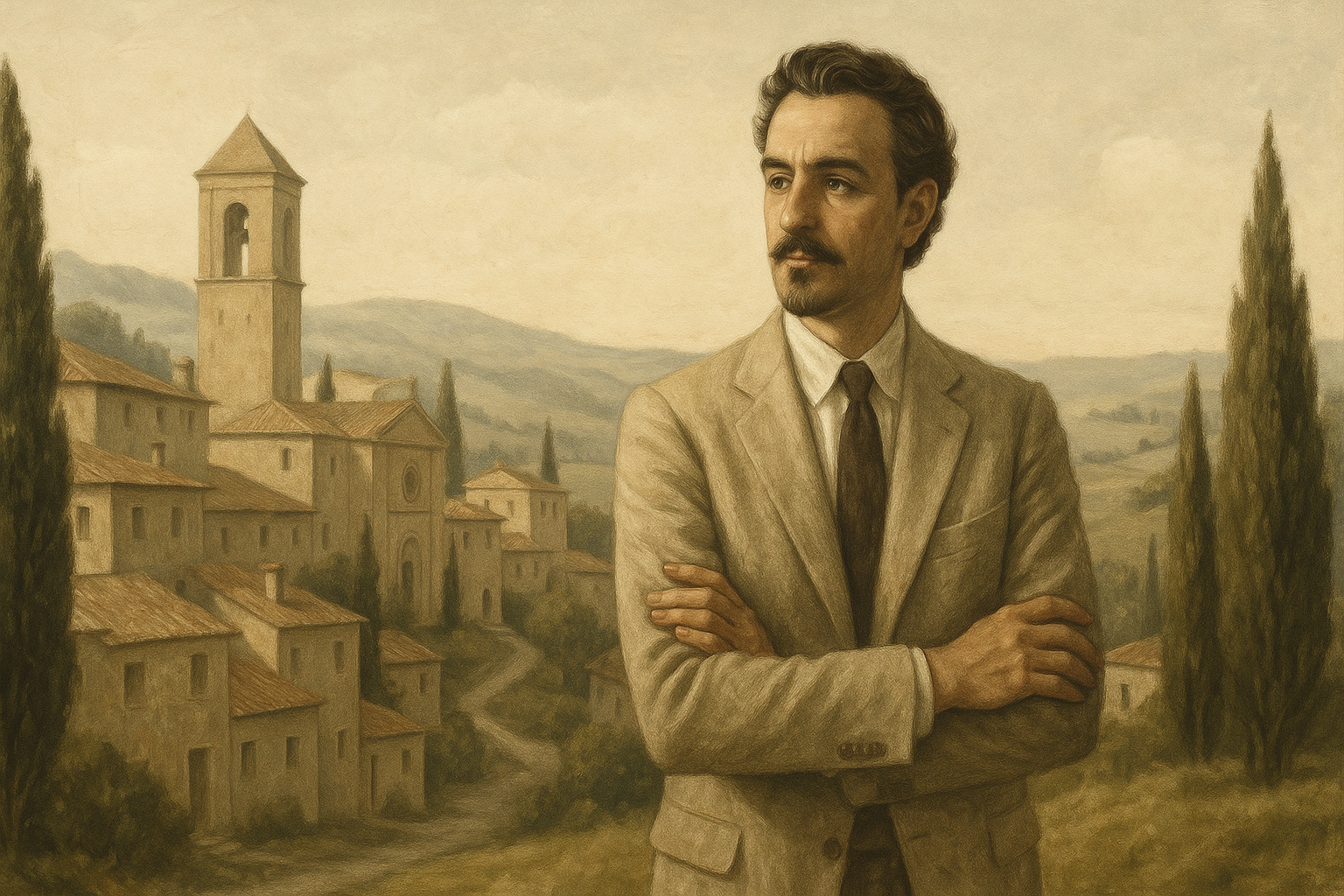
Brunello Cucinelli built one of the most respected luxury houses in the world by following an unusual compass. While most founders chase speed, scale, and noise, he chose thought, craft, and a life with room to breathe. He built a global brand from a tiny Umbrian village without losing his sense of calm or his connection to simple pleasures. His story is a reminder that ambition does not have to destroy balance and that a company can be both successful and deeply human.
Cucinelli has said many times that he feels driven by an internal force he did not choose. It is the sense that life must not be wasted. This belief has guided every part of his career. From his early years watching his father suffer humiliating treatment at work to his decision to center his entire business inside the village of Solomeo, the pursuit of a meaningful life has been his anchor.
The result is a company that stands apart in the fashion world. It is profitable, admired, and rooted in ideals that go back to the ancient writers he spends his evenings studying. To understand how he built it, you must start with the experiences that shaped him long before he became known as “the king of cashmere.”
Cucinelli was born into a farming family in rural Italy. Money was tight. Electricity came late. Entertainment was simple. Books, shared stories, and quiet reflection filled the evenings. That time taught him to appreciate slowness, something he has carried throughout his life.
When his father left farm work for a factory job, the family expected stability. Instead, young Brunello watched his father endure daily disrespect. He remembers the look in his father’s eyes when he came home. That sadness, mixed with exhaustion, left a mark that would shape the way he viewed dignity at work. He has said that his father’s tearful eyes became the inspiration behind his mission.
He did not know it then, but the foundation of humanistic capitalism was forming.
Cucinelli did not excel in school. What he did have was a restless energy. He read philosophy, studied the classics, and looked for ideas that could unify his thoughts about life, work, and fairness. He was drawn to writers who believed that every person holds a mission given at birth. His challenge was to uncover his own.
He spent evenings reading Machiavelli, Seneca, and Marcus Aurelius. He admired how thinkers from distant centuries could speak to him through simple words on a page. He loved the idea that books allow a person to step inside another mind. This habit would later influence his leadership style, his focus on clarity, and his ability to communicate complex ideas with everyday language.
In his twenties he had little money but an enormous amount of enthusiasm. That combination, he believed, was enough to begin. The fashion industry was not part of any long-term strategy. It was a practical choice. He saw an opportunity to bring color to cashmere at a time when the material was still seen as old fashioned and limited.
Cucinelli began with one product. He worked tirelessly to perfect it. He had a clear belief that to stand out, a person must focus on a single dream for a long time. This focus became the backbone of his entire career.
His first success came from a batch of colored cashmere sweaters. They sold well. That early spark was enough to confirm that he had chosen the right direction.
Long before he hired employees or designed collections, Cucinelli built a philosophy. He wanted a business where people could work with pride. He wanted a place where craftsmanship mattered and where the dignity of the worker was protected. He believed that a company should elevate life, not drain it.
He set limits on work hours and introduced fair wages. He refused to let urgency replace thought. He fought hard to preserve calm. He created a schedule that gave him time to think each day. He believed that many people fill their days like a dentist’s calendar, leaving no time for reflection. He saw this as dangerous. A founder who stops thinking eventually loses direction.
This approach was uncommon in the fashion world, but he believed it would produce better results.
In the 1980s Cucinelli made a decision that stunned many in the industry. Instead of building his company in a major fashion capital, he chose Solomeo, a medieval village on a hill in Umbria. At the time it was quiet and overlooked. That was exactly what he wanted.
He believed that beauty has practical value. If you surround people with beauty, they work with more care. If you protect the culture of a place, you give people a sense of pride. Solomeo became more than a headquarters. It became the physical representation of his philosophy.
He restored the village using traditional craftsmanship. He revived abandoned buildings. He protected green spaces. He built a theater, a library, a school of arts and crafts, and a forum dedicated to human dignity. The company became part of the village and the village became part of the company.
This decision shaped everything. Solomeo created an environment where work and life could coexist without conflict.
Cucinelli’s routine reflects the simple life he defends. He works hard, but he also leaves room for family, reading, walks, and community. He avoids overfilled schedules. He protects evenings. He believes that ambition must not come at the cost of sanity. Charlie Munger’s idea that staying sane is harder than getting rich resonated deeply with him.
He refused to push his daughters to live like him. He wanted them to discover their own calling. His role shifted as they grew. First a guide, then a father, and eventually a friend. That progression mirrored the principles he followed inside the company.
This calm lifestyle is part of why his brand stands apart. Luxury for Cucinelli is not excess. It is harmony.
Cucinelli treats craftsmanship with reverence. He views each garment as a small piece of human expression. His factories feel more like workshops. The atmosphere is peaceful. Natural light fills the rooms. The goal is to create conditions where people can do their best work.
He encourages workers to go home at a reasonable hour. He pays above industry standards. He expects mastery. He believes that the work should reflect the dignity of the person who made it.
This approach created a standard of quality that helped the brand rise quickly.
If there is one habit that explains Cucinelli’s success, it is the time he sets aside for thinking. He treats thought as productive work. He reads every day. He revisits the ancient writers who shaped his early years. He believes they provide timeless guidance because they wrote with clarity and simplicity.
He avoids jargon. He avoids complex language. He admires thinkers who can express deep ideas in a way that anyone can understand. This influences the way he writes, speaks, and leads.
Cucinelli’s philosophy rests on a simple belief. Work should honor humanity. Profit should not come from exploiting workers. Growth should not destroy beauty. He argues that a company can succeed while treating people well.
That philosophy guided decisions such as limiting work hours, restoring Solomeo, investing in cultural projects, and preserving local traditions. His model works because it aligns the goals of the workers, the company, and the community.
In an industry known for volatility, his business has grown steadily for decades.
Cucinelli believes that postponing rewards increases appreciation. He finds value in slow progress. He rejects the modern impulse for instant results. His company grows deliberately. He invests in projects that will take years to complete.
This patience gives his brand stability. It keeps him grounded. It helps him avoid the traps that come with rapid expansion.
He often speaks of enthusiasm with admiration. He believes it can move mountains. He began with almost no money but carried enormous enthusiasm. That energy drew others to his cause. It helped him push through setbacks. It gave meaning to long days and constant effort.
Even now, with a global brand behind him, he continues to build Solomeo day after day. His success has not changed his routine or his values.
Cucinelli discovered the mission he believes he was born to carry out. He built a company that respects human dignity. He revived a village. He created one of the most admired luxury brands while maintaining a balanced life filled with simplicity and care.
His career is proof that a founder can build something extraordinary without sacrificing peace, family, or purpose.
Focus on one meaningful project
Cucinelli believed that standing out requires focusing on a single dream for many years. Choose one ambition that matters and commit to it fully.
Schedule time to think
Do not allow your calendar to erase your mind. Block space each day for reflection. Good thinking improves every decision.
Create an environment that supports good work
Your surroundings affect your output. Build a workplace that elevates energy and encourages pride.
Protect dignity at all levels
Treat people with fairness. Pay well. Respect time. Build a culture where people feel valued.
Stay patient in a culture that celebrates speed
Growth built slowly is often growth that lasts. Resist the urge for shortcuts.
Let enthusiasm fuel difficult stages
Money is useful. Enthusiasm is essential. It creates momentum when resources are limited.
Balance ambition with a simple life
Success should not require the destruction of calm. Protect evenings, family, and the parts of life that keep you grounded.
If you want to explore more stories of extraordinary founders, visit the Famous Founders archive here:
https://hustlelife.net/famous-founders/

We're An Affiliate - We are reluctant to allow advertising on this blog, which we believe will spoil the user experience. Instead (so that we can continue sharing our knowledge and expanding our content), we have decided to include affiliate links for the products that we use and/or rate highly.