

Hans Wilsdorf lost both parents by the age of twelve. His uncles raised him with a strict expectation of discipline and self-reliance, giving him few comforts and many responsibilities. He later believed this early push toward independence shaped everything he achieved in business. It forced him to trust his own decisions, stay calm during uncertainty, and take responsibility for outcomes. Those instincts would guide him for the rest of his life.
He grew up without safety nets. That absence sharpened his awareness of opportunity. It also made him careful with money and patient with progress. These qualities mattered years later when he began to challenge an entire industry that dismissed his ideas.
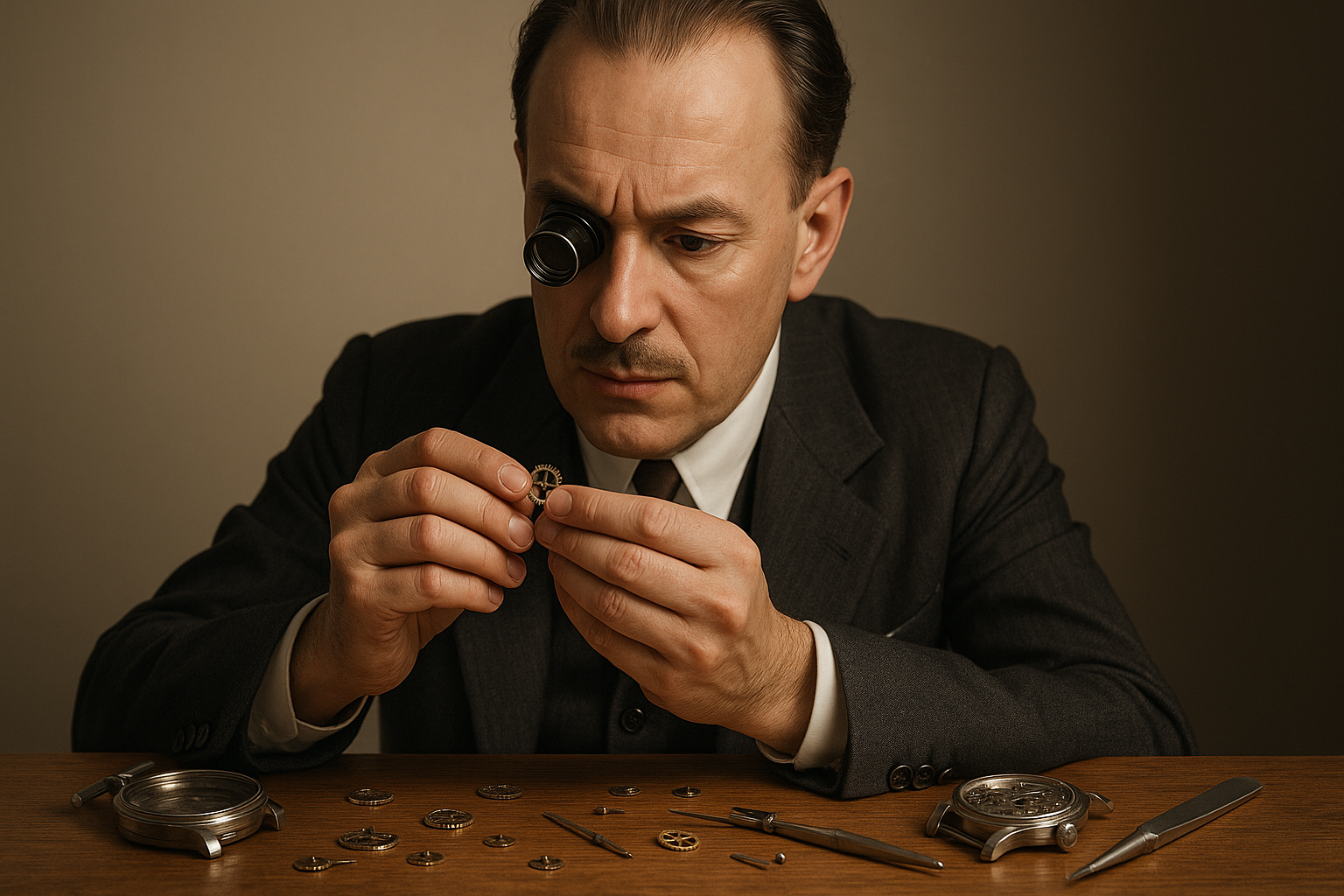
As a young man, Wilsdorf worked for a watch exporter in Switzerland. The role demanded precision. He handled delicate mechanisms, inspected movements, and became familiar with small inconsistencies that revealed deeper problems. He noticed patterns in customer complaints. He learned which manufacturers were consistent and which made excuses.
This early exposure taught him that quality was not simply a marketing word. It was a measurable property of careful craftsmanship. It taught him that reliability builds loyalty. He stored every lesson away, unsure where they would lead, but certain they would matter.
In the early 1900s, wristwatches for men did not exist. The idea itself was considered a novelty for women. Men carried pocket watches because that was the accepted expression of masculinity and refinement. A watch on the wrist was seen as flimsy, impractical, even laughable.
Wilsdorf thought differently. He believed the wrist would eventually become the most practical place to keep time. He understood that convenience wins when combined with reliability. He predicted that once the technology improved, wristwatches would replace pocket watches almost completely.
This was not a casual thought. It was a conviction. As early as 1914, he shared his belief openly, stating that wristwatches would one day dominate. Most people ignored him. Some mocked the idea outright. But he kept moving, confident that technology could catch up to the vision he held.
Wilsdorf viewed belief as a strategic advantage. He recognized possibilities before others did because he refused to let convention guide him. Once he sensed the potential of the wristwatch, he committed to the idea with full force.
He saw a product category that did not yet exist but would eventually grow into a global market. That belief allowed him to make decisions years ahead of his competitors. While other manufacturers kept perfecting pocket watches, he funneled resources into making wristwatches accurate, durable, and comfortable.
His competitors saw the current market. Wilsdorf saw the future market. That difference created the gap Rolex eventually dominated.
Wilsdorf founded Rolex with a clear purpose: build the best wristwatches in the world. Not the cheapest, not the quickest to produce, but the most trustworthy. He wanted people to feel absolute confidence when they glanced at a Rolex.
He worked closely with movement makers in Switzerland to improve accuracy. He refined the case designs to protect the delicate mechanisms inside. Every improvement came from direct observation of problems. If water was an issue, he searched for sealing methods. If dust caused failures, he invested in tighter tolerances.
He once said that business is problems and that the best companies are simply effective problem solving machines. Rolex operated exactly that way. Each challenge became a catalyst for new innovation.
Unlike competitors who treated technical breakthroughs as occasional events, Wilsdorf saw innovation as an ongoing requirement. He believed the company should always aim toward higher standards, even when customers appeared satisfied.
This mindset led to one of Rolex’s defining achievements: the waterproof Oyster case. Before the Oyster, watches were vulnerable to moisture and dust. Everyday activities could ruin them. The Oyster unlocked a new level of reliability that immediately separated Rolex from everyone else.
The innovation did more than solve a technical issue. It expanded what a watch could be. Once people trusted their watch not to fail, they wore it more often. They wore it while traveling, working, or competing. That constant visibility turned the watch into a personal companion instead of a delicate tool tucked away in a pocket.
The Oyster shaped the market. And once it existed, it opened the door for something even more important.
With the Oyster case established, Rolex developed the Perpetual movement. This self-winding mechanism changed how people interacted with their watches. Instead of winding them manually, the watch harnessed natural motion from the wrist.
The connection between the two innovations was simple. The Oyster protected the movement. The Perpetual used motion to keep the watch running. Each improvement amplified the value of the other.
Wilsdorf understood something many founders overlook: innovation compounds. Once you create a breakthrough, it creates space for additional breakthroughs. One solved problem produces the conditions for another opportunity to appear. He followed this pattern for decades, improving technology step by step until the Rolex identity became unmistakable.
Rolex was one of the first watch companies to invest serious money into marketing. Wilsdorf believed that craftsmanship and communication must work together. A great product deserves a great story and a great brand.
He refused to cut advertising during recessions. While competitors scaled back, he increased spending. Independent studies showed that brands maintaining visibility during downturns gained market share once the economy recovered. Wilsdorf followed this logic long before it became widely known.
He also understood social proof. He associated Rolex with respected figures, historic achievements, and demanding environments. He placed the brand wherever excellence lived. The watches climbed Everest, crossed the English Channel, and accompanied explorers, pilots, and athletes. These stories signaled reliability more strongly than any technical explanation.
One advertisement read: Men who guide the destinies of the world wear Rolex. It captured the image Wilsdorf wanted to build. Rolex was the choice of leaders, achievers, and decision makers.
Throughout the growth of Rolex, Wilsdorf never drifted from his main objective. He wanted to build the most reliable wristwatch in the world, and every decision supported this aim.
He avoided distractions, resisted trends, and refused to dilute the brand. He did not chase rapid expansion. He chased perfection. That focus protected Rolex from short term thinking and kept the brand consistent even as the industry changed.
Wilsdorf believed a company should stay committed to a clear course for generations. He led Rolex with that philosophy, and it carried the company long after his own lifetime.
Hans Wilsdorf built Rolex to last far beyond him. He arranged the company’s structure so that it could operate independently, free from takeover risks and immune to short term investor pressure. That protection allows Rolex to keep improving its technology slowly and patiently without external demands forcing shortcuts.
His legacy is not defined by a single invention. It is defined by a pattern of decisions. He combined belief, patience, precision, and marketing in a way that formed a blueprint for long term brand excellence.
Rolex grew into a global symbol of craftsmanship, reliability, and achievement because Wilsdorf understood the relationship between vision and execution. He believed in a future no one else could see, and he invested relentlessly until the world caught up to him.
Every thriving founder faces resistance from convention. Wilsdorf’s story shows that when you have clarity, commitment, and a long view, you can reshape entire industries.
Believe early and act boldly
Wilsdorf’s confidence in wristwatches came years before others saw the opportunity. Early belief gives founders precious time to build momentum while competitors stay focused on the present.
Build a company that solves problems
He treated every technical issue as a chance to improve Rolex. Strong companies are built on consistent, disciplined problem solving.
Use innovation to unlock more innovation
The Oyster case made the Perpetual movement possible. Breakthroughs compound when you build one improvement on top of another.
Protect your focus
Wilsdorf kept Rolex centered on accuracy, durability, and quality. Long term focus prevents dilution and keeps a brand strong through decades of change.
Invest in visibility even when others retreat
Rolex increased advertising during downturns. Visibility during difficult times builds leverage when conditions improve.
Create associations that lift the brand
Rolex appeared on the wrists of achievers, adventurers, and leaders. Social proof accelerates trust and elevates brand positioning.
Stay patient and improve steadily
Wilsdorf viewed excellence as a long game. Small consistent improvements build a foundation that competitors cannot easily copy.
Let product and identity reinforce each other
Rolex created watches that performed in demanding environments. Those performances fueled stories. The stories reinforced the brand. The cycle strengthened itself with each success.
If you want to explore more stories of extraordinary founders, visit the Famous Founders archive here:
https://hustlelife.net/famous-founders/

We're An Affiliate - We are reluctant to allow advertising on this blog, which we believe will spoil the user experience. Instead (so that we can continue sharing our knowledge and expanding our content), we have decided to include affiliate links for the products that we use and/or rate highly.