

The world of shopify dropshipping is exploding, making it easier than ever to launch an online business from anywhere. Whether you are new or looking to grow, this guide will walk you through building, launching, and scaling your own shopify dropshipping store.
You will discover everything you need to succeed, from grasping the basics and picking the perfect niche to setting up your store, finding reliable suppliers, and optimizing for growth. Real success stories prove what is possible. Get ready for practical, step-by-step strategies that will help you turn your vision into a thriving business.
Shopify dropshipping has transformed the way entrepreneurs launch online businesses. With this model, almost anyone can start selling products globally without ever touching inventory. But how does it work, and why do so many choose Shopify dropshipping over other ecommerce paths?

At its core, shopify dropshipping is a business model where you sell products online without holding any inventory. Instead, when a customer places an order on your Shopify store, you forward the order to your supplier, who ships the product directly to your customer. This eliminates the need for warehousing and upfront bulk purchases.
Compared to traditional ecommerce, shopify dropshipping dramatically reduces financial risk. There’s no need to invest in stock or worry about unsold products. You can offer a wide variety of products, testing what sells best, all from a single dashboard.
Shopify streamlines the process even further with powerful automation. Orders are processed and sent to suppliers automatically, letting you focus on marketing and customer service. For example, UK brand Skinnydip saw a 20x increase in sales by leveraging shopify dropshipping automations and a global supplier network.
The low barrier to entry is one of the biggest draws. Starting a shopify dropshipping store requires minimal upfront investment, making it accessible for beginners and experienced entrepreneurs alike. Plus, with suppliers and customers worldwide, your business can scale quickly. The global dropshipping market projected to reach $464.4 billion highlights just how massive this opportunity is.
Shopify dropshipping offers several compelling benefits:
Flexibility to run your business from anywhere
Scalability, as you can add new products with a few clicks
Minimal risk, since you only pay suppliers after you make a sale
Access to a vast product range without warehousing headaches
However, there are challenges to consider:
High competition, since the barrier to entry is so low
Relying on suppliers for inventory quality and shipping speed
Lower profit margins compared to traditional retail
Potential shipping delays, especially with international suppliers
According to Shopify data, online shopping trends continue to rise, and dropshippers save significantly on upfront capital compared to stocking inventory. Raging Mammoth, a successful Shopify store, credits shopify dropshipping for their ability to pivot quickly and scale with minimal risk.
Choosing the right platform and tools is crucial. Shopify’s built-in features and trusted app ecosystem provide a strong foundation for overcoming challenges and maximizing your shopify dropshipping store’s success.
Finding the right niche and products is the foundation for any successful shopify dropshipping business. Your choices here will determine your branding, marketing strategies, and long-term growth potential.

The first step in shopify dropshipping is selecting a niche that stands out and attracts your ideal customer. Niche selection shapes your store’s identity, marketing, and ability to compete. But how do you find a niche with real potential?
Start by using market research tools like Shopify’s trending products guide. These resources highlight hot products and rising categories, giving you a head start. Look for niches with high demand but low saturation. For example, LED lights and heat lamps have surged in popularity, according to Shopify’s own guides.
Analyze the competition by searching for your product ideas on Google, social media, and Shopify stores. Are there many established players, or is there room for a new entrant? A niche with moderate competition and clear demand is ideal.
Consider seasonality and evergreen potential. Products like gardening tools may spike in spring, while fitness gear sells year-round. Strive for a balance between trending and evergreen products to create steady cash flow in your shopify dropshipping store.
Finally, leverage Shopify’s free resources—market research articles, product trend reports, and niche validation tools—to confirm your ideas before you commit. This step saves time, money, and frustration.
Once you’ve pinpointed a promising niche, it’s time to validate and source products for your shopify dropshipping business. Product quality and supplier reliability are critical for maintaining customer trust and minimizing returns.
Begin by checking customer reviews and product ratings on supplier platforms. High ratings and positive feedback indicate a reliable offering. Always order samples yourself before listing a product, so you can assess quality firsthand.
Shipping times and fulfillment options are just as important. Compare global suppliers with local ones—domestic suppliers can deliver faster and improve customer satisfaction, but may have higher costs. Use Shopify’s product sourcing guides to explore reputable directories and supplier lists.
Here’s a quick checklist to streamline your process:
Review product quality and ratings
Order samples for inspection
Confirm shipping speed and reliability
Check supplier’s inventory consistency
Assess communication and support
You can also explore different sourcing platforms to broaden your options. For a comprehensive look at alternatives beyond Alibaba, see this guide on sites like Alibaba for sourcing.
Remember, the right supplier will help you deliver a better customer experience and reduce headaches as you scale your shopify dropshipping store.
Building a shopify dropshipping store is your gateway to a flexible, scalable online business. This section will guide you step by step, ensuring your foundation is strong and ready for growth.
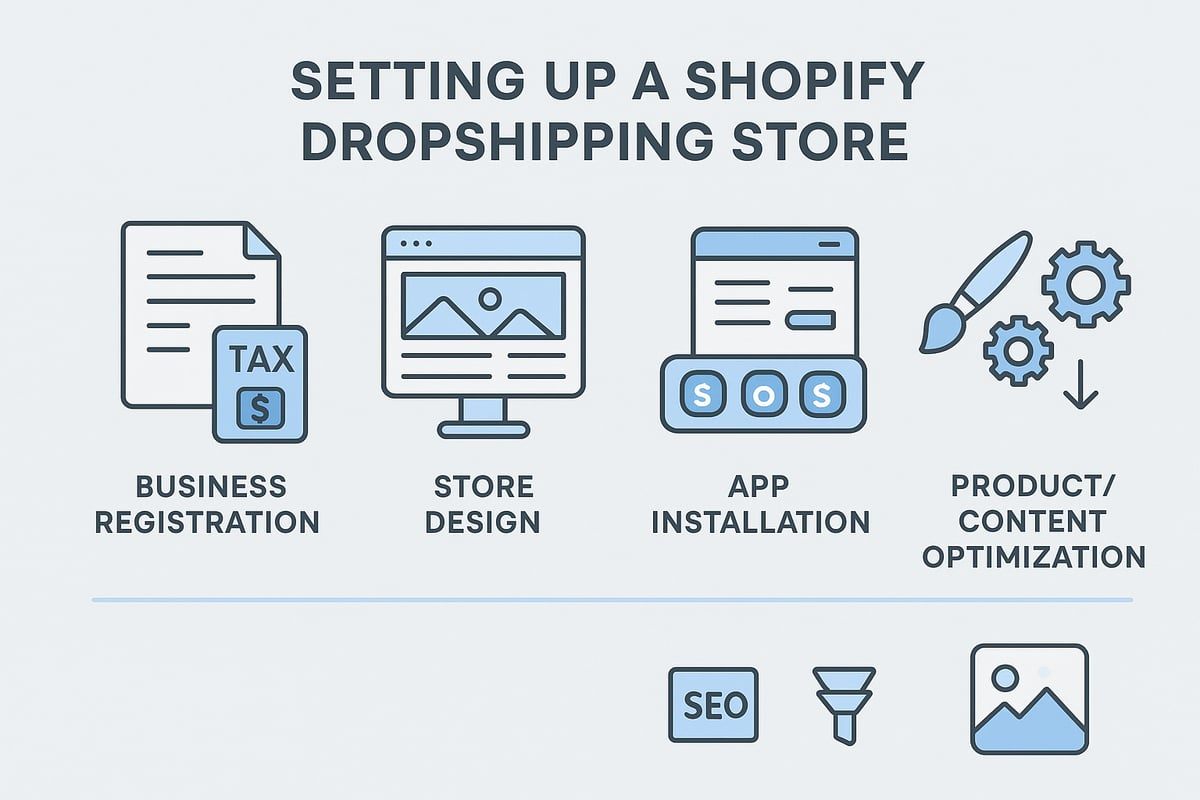
Starting your shopify dropshipping journey begins with a few crucial legal and technical steps. First, decide on your business structure. Should you operate as a sole proprietor, LLC, or corporation? Each option impacts taxes, liability, and credibility.
Next, research any licenses or permits required in your region. Register for an employer identification number if needed. These steps help keep your shopify dropshipping store compliant and trustworthy.
Now, set up your Shopify account. Take advantage of the free trial to explore the platform. When you are ready, choose a plan that fits your goals and budget. Secure a domain name that matches your brand for a professional look.
Remember, a memorable domain and proper registration set the tone for building customer trust. These first steps are the backbone of your shopify dropshipping business.
The design of your shopify dropshipping store directly shapes your customer’s first impression. Start by selecting a high-converting theme like Dawn from the Shopify Theme Store. Look for themes that are mobile-responsive and easy to customize.
Use Shopify’s online store editor to adjust colors, fonts, and layouts. Make navigation simple and intuitive. Add your logo and brand imagery to create a cohesive identity.
Ensure you include essential pages:
Homepage
Product pages
FAQs
Contact page
A well-organized structure helps guide visitors smoothly from browsing to checkout. Consistent branding and a user-friendly layout can set your shopify dropshipping store apart in a crowded market.
To automate and streamline your shopify dropshipping operations, you will need the right apps. Explore options like DropCommerce, Syncee, AI Dropship, and DSers. Each app offers different supplier networks, product selections, and automation levels.
Connect your chosen app to import products directly into your store. Set up order automation so that when a customer buys, your supplier is notified instantly. This saves time and reduces manual errors.
When choosing a dropshipping app, consider these criteria:
Supplier location and shipping speed
Product variety and niche fit
User reviews and support quality
For example, DropCommerce is ideal for US and Canada suppliers, while Syncee offers global reach. The right integrations can make your shopify dropshipping store run like a well-oiled machine.
Optimizing your shopify dropshipping store for conversions is where you turn traffic into sales. Start by rewriting product titles and descriptions, making them unique and persuasive. Avoid copying supplier content—use your own voice to highlight benefits and solve customer pain points.
Invest in high-quality images and, where possible, include product videos. These boost trust and help shoppers visualize their purchase.
SEO is vital for organic growth. Use Shopify’s built-in tools to edit meta titles, add alt text, and improve site structure. Target keywords your audience actually searches for.
To maximize your conversion rates, consider using a sales funnel tool. For a comprehensive comparison, check out the Best sales funnel builders to see which can enhance your shopify dropshipping store’s results.
Finally, edit and update listings regularly based on analytics and feedback. A continuously optimized store keeps you ahead of the competition and drives long-term success.
Finding reliable suppliers is the backbone of a successful shopify dropshipping business. The right partnerships can mean the difference between seamless growth and constant headaches. Let’s break down how to identify, evaluate, and nurture these crucial relationships for long-term success.

There are several ways to source products for your shopify dropshipping store. The most common options include:
Dropshipping apps: These integrate directly with Shopify, letting you browse and import products in a few clicks. Popular examples are DSers, Syncee, and DropCommerce.
Direct supplier relationships: Some entrepreneurs connect directly with manufacturers or wholesalers. This route offers more customization and control, but requires extra communication and negotiation.
Shopify Collective: This platform connects you with established brands and automates returns, providing convenience and trust.
Each method comes with trade-offs. Dropshipping apps offer automation and speed, while direct relationships give you more influence over product quality. Shopify Collective is great for those seeking reputable brands.
To explore vetted supplier directories and reviews, check resources like the SaleHoo review for dropshippers, which can help you find trustworthy partners for your shopify dropshipping journey.
Your supplier is your silent business partner. To ensure your shopify dropshipping operation runs smoothly, focus on these key criteria:
Product quality: Request samples and inspect quality before listing items.
Shipping speed: Opt for suppliers with fast, reliable delivery to your target markets.
Inventory reliability: Choose partners with accurate stock levels to avoid order cancellations.
Customer service: Responsive support can resolve issues promptly and keep customers happy.
Read supplier reviews and check their performance history. Negotiate terms for pricing, fulfillment, and returns upfront. Domestic suppliers can often offer faster shipping, leading to higher customer satisfaction.
Selecting the right supplier for your shopify dropshipping business is a strategic move that will impact your reputation and bottom line.
Long-term success in shopify dropshipping depends on more than just finding a good supplier; it’s about building a solid partnership. Start with clear, friendly communication. Set expectations for order volumes, fulfillment times, and product updates.
Aim to become a preferred or exclusive partner by demonstrating reliability and mutual growth. This can lead to better pricing and priority service. When issues like out-of-stock items occur, address them promptly and work together to find solutions.
Use automation tools within Shopify to efficiently manage multiple suppliers. Regular check-ins and performance reviews keep the relationship healthy, ensuring your shopify dropshipping operations stay resilient even as you scale.
Looking to stand out in the competitive shopify dropshipping landscape? Print-on-demand and private label models are powerful ways to differentiate your store.
Print-on-demand: Offer custom-designed products like t-shirts, mugs, or posters without holding inventory.
Private label: Collaborate with suppliers to create unique branded products, boosting perceived value and loyalty.
Both models allow for creative branding and higher margins. Shopify’s ecosystem supports these options with dedicated apps and guides, making setup straightforward.
By incorporating print-on-demand or private label products into your shopify dropshipping business, you create a memorable brand that customers love to return to. This strategy not only improves your market position but also fosters customer loyalty for the long haul.
Launching a shopify dropshipping store is just the beginning. The real challenge lies in optimizing every aspect of your business for conversions and sustainable growth. With only 1.5% of dropshipping stores achieving over $50,000 in monthly revenue, strategic optimization is what separates thriving stores from the rest. Let’s break down the essential steps to transform your shopify dropshipping store into a high-performing, conversion-focused powerhouse.
Your storefront is your digital first impression. For shopify dropshipping, a clean, modern design builds trust and keeps visitors engaged. Choose a mobile-responsive theme like Dawn, ensuring your store looks sharp on any device.
Focus on fast load times by optimizing images and limiting unnecessary apps. Add clear calls-to-action so customers always know what to do next. Streamline your checkout using Shopify Payments to reduce cart abandonment. Remember, even small tweaks to navigation or layout can dramatically boost conversions for your shopify dropshipping store.
Use a simple, clutter-free layout
Prioritize mobile usability
Place primary CTAs above the fold
Simplify menu navigation
A professional storefront not only attracts visitors but sets the tone for your entire shopify dropshipping brand.
Product pages are where buying decisions happen. For shopify dropshipping, high-quality photos and engaging videos showcase your products effectively. Use multiple angles and lifestyle shots to help customers visualize their purchase.
Write persuasive, benefit-focused descriptions that address customer needs and highlight unique selling points. Avoid copying supplier content. Instead, tailor each description to your target audience. Leverage social proof by showcasing customer reviews and testimonials directly on the page.
Feature clear, zoomable product images
Use bullet points to break down features
Highlight customer ratings and feedback
Well-crafted product pages increase trust and encourage more sales in your shopify dropshipping store.
SEO is critical for attracting free, high-intent traffic to your shopify dropshipping store. Start by researching keywords for your product and category pages using tools like Google Keyword Planner. Integrate your main keywords naturally into titles, headings, and descriptions.
Optimize every page’s meta title and description for better visibility in search results. Add descriptive alt text to all images, making your store accessible and SEO-friendly. Build a logical site structure with internal links to help both users and search engines navigate your shopify dropshipping store.
Use target keywords in titles and URLs
Write unique meta descriptions
Link related products and collections
Add image alt text for accessibility
Consistent SEO efforts will compound over time, driving organic growth for your shopify dropshipping business.
Trust is the backbone of every successful shopify dropshipping store. Display trust badges and security certificates prominently, especially on checkout pages. Provide clear shipping, return, and privacy policies so customers feel confident buying from you.
Offer multiple payment methods to accommodate different preferences. Use transparent shipping information, including estimated delivery times and tracking options. These elements reduce hesitation and help convert browsers into loyal customers for your shopify dropshipping store.
Add SSL certificates and trust badges
List detailed policies in the footer
Offer PayPal, credit cards, and local options
A trustworthy, transparent store experience leads to higher conversion rates and more repeat business.
Optimization is an ongoing process. Use Shopify Analytics to monitor traffic sources, sales, and conversion rates in your shopify dropshipping store. Identify top-performing products and pages, then double down on what works.
Experiment with A/B testing for product pages, CTAs, and promotional banners to find the highest-converting combinations. Dive into customer insights to refine your marketing and product selection. Harnessing data allows you to adapt quickly and outpace competitors.
Track sales and traffic trends regularly
Test changes to product pages and offers
Use insights to inform marketing and sourcing
With a data-driven approach, you can continually refine your shopify dropshipping operations and accelerate growth.
Ready to take your shopify dropshipping journey to the next level? Scaling and automation are what separate thriving stores from those that plateau. By leveraging cutting-edge tools and smart strategies, you can grow your business, save time, and outpace your competition.
Automation is the backbone of high-growth shopify dropshipping stores. Shopify Flow, order routing, and fulfillment apps let you automate repetitive tasks, such as updating inventory or managing orders. These tools free up time, so you can focus on strategy.
AI is rapidly transforming ecommerce. In fact, AI integration in e-commerce expected to reach $244 billion by 2025, making automation even more powerful for shopify dropshipping. Consider automating email marketing with Shopify Email, segmenting customers, and using triggers for abandoned carts or post-purchase follow-ups.
Set up rules for multi-supplier order routing.
Use apps to sync tracking numbers and confirm shipments.
Automate restock alerts and low-inventory notifications.
With automation, you can scale without hiring a large team.
Growth in shopify dropshipping often comes from adding new products and reaching new customers. Shopify Collective and dropshipping apps make it easy to expand your catalog with just a few clicks.
You can diversify by introducing trending items, seasonal products, or creating bundles. Selling across multiple channels is a game-changer. Integrate your shopify dropshipping store with Instagram, Facebook, and Google Shopping to reach shoppers everywhere.
Try in-person sales with Shopify POS for local events.
Test new categories and track what resonates.
Use analytics to identify high-performing products.
Expanding wisely increases your revenue streams and builds resilience.
A successful shopify dropshipping business needs consistent, effective marketing. Paid advertising, like Facebook and Instagram ads, can drive targeted traffic quickly. But sustainable growth also means building relationships and brand loyalty.
Content marketing, such as blogging and email newsletters, helps nurture leads and boost repeat purchases. Collaborate with influencers or run user-generated content campaigns to build trust and social proof.
Retarget website visitors with special offers.
Use Shopify’s built-in analytics to track campaign ROI.
Segment your audience for personalized messaging.
A strong marketing plan keeps your shopify dropshipping store top of mind for customers.
As your shopify dropshipping store grows, managing finances becomes critical. Shopify provides tools for tracking expenses, revenue, and profit margins. Use these insights to adjust pricing, negotiate with suppliers, and plan inventory.
Outsourcing fulfillment, using the Shopify Fulfillment Network, can help you handle higher order volumes with ease. Consider automating returns and customer service to maintain a seamless experience.
Shopify’s recent Q2 revenue increased by 31% year-over-year shows the platform’s reliability and continued growth, making it a solid foundation for scaling your shopify dropshipping operations.
Track cash flow and monitor expenses closely.
Plan for bulk ordering or negotiating better supplier rates.
Regularly review financial reports for insights.
Sound financial management ensures long-term stability.
The shopify dropshipping landscape evolves quickly. Staying informed and adaptable is essential for ongoing success. Keep an eye on Shopify Editions, attend webinars, and participate in community forums to stay updated.
Experiment with new marketing channels, product types, and automation features. Shopify’s business academy and free resources provide ongoing learning opportunities for every level.
Test new strategies and measure results.
Join Shopify webinars for expert advice.
Connect with other dropshippers in online communities.
Continuous learning and innovation will keep your shopify dropshipping business ahead of the curve.
If you're inspired by the possibilities of Shopify dropshipping and eager to turn your ambitions into real results, you're not alone. Building a profitable online business in 2025 is about more than just picking the right products—it's about choosing the smartest strategies and learning from those who've already succeeded. That's why I encourage you to take the next step and Explore High Ticket Dropshipping for Free. It's a no risk way to discover proven tactics, see real case studies, and equip yourself with everything you need to launch a winning store. Why not start today?

We're An Affiliate - We are reluctant to allow advertising on this blog, which we believe will spoil the user experience. Instead (so that we can continue sharing our knowledge and expanding our content), we have decided to include affiliate links for the products that we use and/or rate highly.