

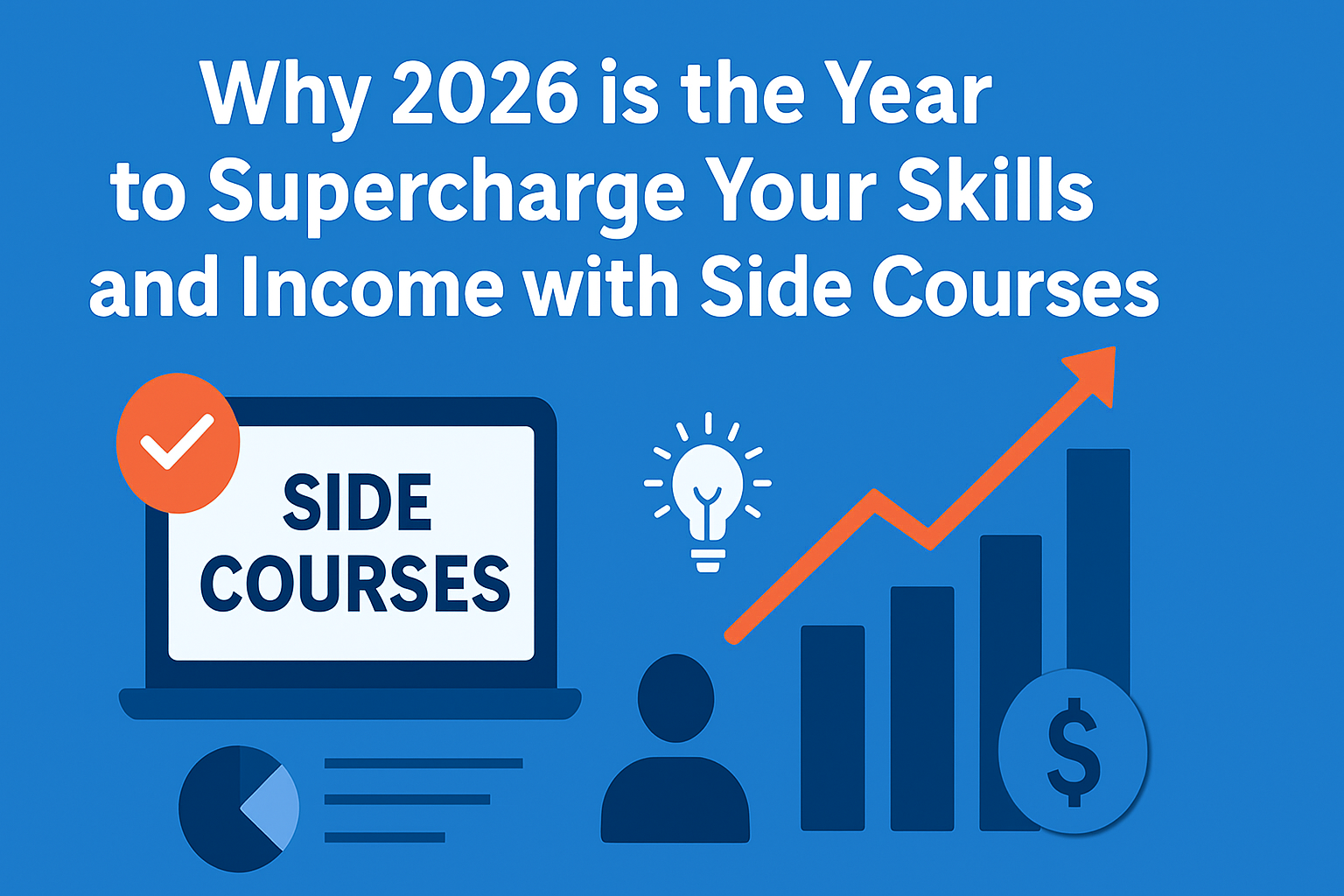
Ready to future-proof your career and income? In 2026, side courses will be the single smartest move you can make to stay ahead, boost your earning power, and expand your skills in a world that never stops changing.
Whether you want to pivot careers, unlock new income streams, or simply become more marketable, this guide reveals 12 proven side courses handpicked for real-world results. From high-ticket dropshipping to analytics, each course is a practical step toward greater freedom and financial security.
Want to see how others are turning learning into profit? Dive in, get inspired, and discover which course will launch your next big win.
The job market is changing faster than ever. Remote work and the gig economy are exploding, giving anyone with hustle more ways to earn. But with more opportunity comes more competition. If you want to stand out in 2026, you need to keep building your skill set, and side courses are the fastest way to do it.
Over 60% of professionals took an online course to upskill in 2024/2025. That's not just a trend, it's a movement. I see it firsthand coaching Dropship Breakthru students: those who invest in side courses are the ones launching profitable stores and finding new income streams, even when industries shift. Whether you're learning backend development or mastering digital marketing, you’re building real leverage.
Why do side courses matter so much? Let’s break it down:
They give you a hedge against automation and industry shakeups.
You can quickly learn micro-skills that make you more valuable in any role.
They open doors to passive income, freelancing, and business ownership.
Each new skill stacks on the last, creating compounding career benefits.
For example, high-ticket dropshipping and affiliate marketing both require a mix of technical, analytical, and creative skills. Side courses let you layer these fast, so you can pivot or scale your business as trends change. I’ve seen students go from zero to five figures a month by stacking skills from analytics, design, and automation courses.
Looking for new income streams? Side courses are your launchpad. If you want more ideas, check out this list of ways to make money online that connect directly to skill-building. The more you learn, the more doors you open.
The compounding effect is real. Continuous learning is the best insurance you can have for your career. My advice: choose side courses that align with your goals, focus on practical outcomes, and measure your ROI. The market rewards those who stay ahead of the curve.
Looking to future-proof your skills and income? The right side courses can open doors you never knew existed. Whether you want to automate your store, master analytics, or pivot into a new field, these 12 side courses are handpicked for real-world impact. Dive in to find the perfect fit for your goals and start stacking skills that pay dividends.
If you want to automate your workflows or build robust web apps, this is one of the most powerful side courses out there. The course covers JavaScript, NodeJS, Express, and MongoDB, letting you master CRUD operations and NoSQL databases.
For dropshippers and SaaS builders, these backend skills are a game changer. You can automate order processing, create custom dashboards, or streamline inventory management.
Pricing: Free to audit, paid certificate for those who want proof.
Best for: Aspiring web developers or entrepreneurs looking to add automation to their business.
Pros: Hands-on projects help you apply what you learn.
Cons: Intermediate level, so be ready for a challenge and time commitment.
Mastering backend development gives you a competitive edge and makes your projects scalable from day one.
Business analytics is the secret weapon behind high-performing e-commerce and affiliate projects. This is one of those side courses that pays for itself fast by teaching you to leverage data for smarter decisions.
You’ll learn Excel, Tableau, and Google Analytics, making it easier to track ad spend, optimize inventory, and spot trends.
Pricing: Varies, but many affordable or free options.
Best for: Entrepreneurs, marketers, and operators who want to turn data into profit.
Pros: High ROI, data-backed strategies.
Cons: Can feel overwhelming at first if you’re new to analytics.
Data-driven decisions are what separate amateurs from pros. Start here if you want to level up your results.
First impressions matter. This side course teaches you the basics of UI design, branding, and prototyping, all with a beginner-friendly approach. If you're running a store or freelancing, great visuals build trust and boost conversions.
Pricing: Free, so there’s no barrier to entry.
Best for: E-commerce owners, freelancers, or marketers wanting to stand out.
Pros: Includes a portfolio project you can showcase to clients.
Cons: Covers fundamentals, so you’ll need to keep learning for advanced skills.
Apply what you learn to your Shopify store or portfolio and watch your conversion rates climb.
Digital marketing is the backbone of every online business. This is one of those side courses that teaches you SEO, PPC, social media, and content marketing in one place.
With the right strategies, you can drive targeted traffic and boost sales for any project. The landscape changes fast, so staying sharp is key.
Pricing: Options range from free to premium, so you can start at any budget.
Best for: Affiliate marketers, dropshippers, and business owners.
Pros: Real impact on revenue with actionable tactics.
Cons: You’ll need to keep up with trends.
Want to dive deeper into affiliate marketing? Check out these Affiliate marketing training courses for a breakdown of the best programs to grow your income streams.
Automate your business and build custom tools with this practical side course. You’ll get a solid grip on JavaScript, backend logic, and data structures, making it easier to streamline repetitive tasks.
Pricing: Free, which makes it accessible for anyone.
Best for: Entrepreneurs and marketers who want to get hands-on with tech.
Pros: Real-world focus with immediate application.
Cons: You’ll need basic coding knowledge to get the most out of it.
Picture automating your affiliate campaign reports or setting up custom notifications. That’s the power of adding technical skills to your side courses toolkit.
Great communication is a superpower. This side course helps you master storytelling and simplify complex ideas, which is crucial for effective sales copy, content, and client pitches.
Pricing: Free, so it’s risk-free to try.
Best for: Content creators, coaches, and product owners.
Pros: Unique focus you won’t find in most side courses.
Cons: More niche, but high impact if you use it.
Use storytelling to create high-converting sales pages or explain your products in a way that sticks.
If you want to deliver projects on time and scale your business, project management is a must-have skill. This side course covers Agile, Scrum, time management, and team leadership.
Pricing: Both free and paid options, so you can start small.
Best for: Entrepreneurs, freelancers, and team leaders.
Pros: Universal skill that applies to any business.
Cons: Can feel dry unless you apply it right away.
Imagine launching new products or managing a team of VAs with zero chaos. That’s the power of project management in your side courses arsenal.
Broken checkout pages or buggy apps can kill your profits. This side course equips you with skills in software testing, automation, and bug tracking to ensure everything works perfectly.
Pricing: Varies, but worth the investment to prevent costly mistakes.
Best for: Developers, store owners, SaaS founders.
Pros: Prevents errors that could cost you sales.
Cons: Detail-oriented and a bit technical.
Test your checkout process or landing pages and reduce cart abandonment by applying these side courses.
If you want to build authority with data-driven content, this is the side course for you. Learn how to present data, write technical reports, and publish research-backed blog posts.
Pricing: Free, which makes it a no-brainer for content creators.
Best for: Bloggers, coaches, and course creators.
Pros: Boosts your credibility and trust.
Cons: Has an academic feel, but the skills are practical.
Delivering content backed by real numbers makes your affiliate marketing or coaching stand out in a crowded market.
Step into the future with this advanced side course in 3D animation and real-time rendering. It’s a premium investment, but the demand for 3D skills in gaming, YouTube, and e-commerce is exploding.
Pricing: ₹3.6 L (about $4300), so it’s for those ready to go all in.
Best for: Creators, animators, and marketers who want to break into 3D content.
Pros: High demand and creative potential.
Cons: Expensive and requires serious commitment.
Imagine creating 3D product demos or immersive ads—this side course can make that a reality.
Efficiency is profit. This side course dives into CRM, automation, and productivity software that can save you hours every week and help you scale faster.
Pricing: Free or affordable, making it a smart first step.
Best for: Solopreneurs and small business owners.
Pros: Direct time savings and better customer experience.
Cons: You might feel overwhelmed by tool choices.
Automate your customer follow-ups or streamline operations and watch your business grow with the right side courses.
Ready to build your own business? This side course covers business models, validation, fundraising, and scaling—everything you need to launch confidently.
Pricing: Varies, so you can find one that fits your budget.
Best for: Aspiring founders, side hustlers, and freelancers.
Pros: Holistic overview of what it takes to succeed.
Cons: May lack depth in some areas, so supplement as needed.
Validate your next high-ticket dropshipping store or side hustle idea and turn your knowledge from side courses into real income.
Choosing the right side courses can make or break your growth in 2025. With new platforms and options everywhere you look, it is easy to feel stuck or overwhelmed. Here is how to cut through the noise and pick the best fit for your goals.
1. Get Clear on Your Objectives
First, ask yourself: Why are you interested in side courses? Are you aiming to boost your income, switch careers, stack new skills, or scale your business? Knowing your “why” makes it much easier to filter options and avoid wasting time.
2. Pinpoint Your Skill Gaps
Look at your current skills and spot the gaps that could hold you back. For example, if you are strong in marketing but weak in automation, prioritize a tech-focused course. Side courses work best when they fill in missing pieces that unlock new opportunities.
3. Consider Future-Proofing
Industries move fast. Focus on side courses that teach durable skills, like data analysis or digital marketing. According to recent EU data on online learning participation, more professionals than ever are upskilling online to stay competitive.
4. Compare Course Formats
Not all side courses are the same. Some are self-paced, letting you learn on your schedule. Others are cohort-based, which offer live sessions and community. Project-driven courses are great if you learn by doing. Think about your learning style and time constraints.
Format | Flexibility | Community | Best For |
|---|---|---|---|
Self-paced | High | Low | Busy schedules |
Cohort-based | Medium | High | Accountability |
Project-driven | Medium | Medium | Portfolio growth |
5. Evaluate Pricing and ROI
Check the cost, but do not just look for the cheapest option. Weigh time commitment, average course length (15–55 hours), and the potential return. Will the side courses pay for themselves in new income, higher rates, or saved time?
6. Look for Real-World Application
The best side courses include hands-on projects, certifications, and access to a community. These features help you put theory into practice and build a portfolio employers or clients will notice.
7. Check Reviews and Alumni Results
Scan ratings, reviews, and alumni success stories. I recommend sticking to side courses with 4.5 stars or higher and proven outcomes. Real testimonials are a sign you are on the right track.
8. Actionable Tip: Start Small, Stack Fast
Begin with one high-impact side course that matches your biggest gap. Implement what you learn immediately. Then, every quarter, add a new course to your stack. This is the exact approach our Dropship Breakthru students use to multiply their results.
Choosing the right side courses is not about chasing trends. It is about building your own custom roadmap—one skill at a time. With the right process, you will turn learning into real leverage.
Ready to get the most out of your side courses? Treat every course as a strategic investment, not just a learning experience. The right approach can turn a single course into a game-changer for your income, career, and confidence.
Here’s how to maximize your ROI from side courses:
Set clear, measurable goals. Before enrolling, define what success looks like. Are you after a career pivot, more clients, or a new passive income stream? Clarity keeps you focused and helps you choose the right side courses for your goals.
Apply what you learn right away. Don’t just consume content. Use your new skills in real projects, whether that’s optimizing your dropshipping store, launching a marketing campaign, or building an automation tool. Immediate action cements knowledge.
Document your wins. Build a portfolio or case study from each completed course. Share successes on LinkedIn, your blog, or inside course communities. This builds credibility and attracts new opportunities.
Tap into course communities. Networking with peers and instructors accelerates your growth. Get feedback, stay accountable, and discover shortcuts others have already found. Many top side courses offer vibrant forums or alumni groups.
Reinvest early wins. If your new skills help you land a client or boost sales, funnel some of that income into advanced side courses. This creates a virtuous cycle of skill stacking and income growth.
Track and optimize. Monitor key metrics like revenue, conversion rate, or hours saved. Use tools and templates from your courses to measure progress and adjust your strategy.
Example: One Dropship Breakthru student doubled their store profits in just six months by implementing business analytics learned from side courses. They tracked KPIs, optimized their ad spend, and documented their journey, which attracted new consulting clients.
Pro tip: Treat learning as a recurring investment, not a one-time expense. The online learning market is booming, with more professionals than ever using side courses to stay ahead. If you want to see how fast this trend is growing, check out these global online learning market growth stats.
Start strong, stay consistent, and let your results compound. The ROI from side courses is only limited by your willingness to take action and keep leveling up.
If you’re serious about leveling up your skills and opening new income streams in 2025, why not take the next step and explore one of the most powerful business models out there? High ticket dropshipping is a proven way to build a scalable, passive income online—even if you’re just getting started. I’ve seen readers just like you turn side course skills into real money with the right approach and support. Ready to see how it works for yourself? Explore High Ticket Dropshipping for Free and start building your future today!
We're An Affiliate - We are reluctant to allow advertising on this blog, which we believe will spoil the user experience. Instead (so that we can continue sharing our knowledge and expanding our content), we have decided to include affiliate links for the products that we use and/or rate highly.